
What gets lost when developers can coin a new urban ‘quarter’

Walking through the Jewellery Quarter in Birmingham with its mix of a heritage trade going back 300 years and modern developments is a reminder of the storied origins of these urban districts. Many large cities have famous “quarters” whose origins can be traced back centuries. But the word appears to have been “hijacked” by property developers looking to create a sales vibe for real estate projects that often drive gentrification.
In Birmingham’s case, the combination of the release of land in 1743, the existence of sandpits providing raw materials, the establishment of the Birmingham Assay Office in 1773, and indigenous artisan talent led to the creation of a network of small businesses. Three centuries later and the area is still home to over 700 jewellers and independent businesses — thus, a quarter whose original spirit lives on.
The etymology of the term quarter is derived from the Roman practice of dividing settlements into four with a north-south and east-west line to create four equal sized districts — or quarters in the simplest sense. Over time, the shape has become less important. Instead, they have often been associated with occupation or origin of a particular group of people, typically emerging from guild organisations, settlement patterns or exclusionary laws rather than being purposefully designed. This has given us, for example, garment quarters, Turkish enclaves and Jewish ghettos, respectively.
This resonates with older medieval times, when quarters specialised in particular crafts, cultural or ethnic activities, often outside city or guild controls, as in the Clerkenwell and South Bank areas of London. These categorisations would often help define the area and even particular rules that applied to those inside them so that they became cities within a city.
Their identity would emerge from the people living within it. This is clearly the case in Birmingham’s Jewellery Quarter, New York’s Meatpacking District and Toronto’s Distillery District. Many western cities boast a Chinatown, while more recent ethnic quarters include Banglatown in London’s East End, Little Portugal in Toronto and Little Italy in Philadelphia.
Then there are quarters that have become home to creative professionals —London’s Soho, New York’s Lower East Side or Paris’s Left Bank. These too have deep roots and tend to have emerged organically, shaped gradually by the broader evolution of the city rather than by deliberate design.
Deindustrialisation
The key conceptual break happened in the late 20th century. The collapse of industries that were once core components of Western cities in the face of price competition from the developing world led to factories closing and inner-city areas decaying. The transformation came in two stages, emerging first from the grassroots but then coming from the top down.
As areas became empty and derelict and rents fell to low or zero rates, artists and creatives flocked to areas such as Hackney in London. City burghers saw potential to build on this with a culturally led urban redevelopment to refocus down-at-heel areas onto the consumer and small entrepreneurial economy.
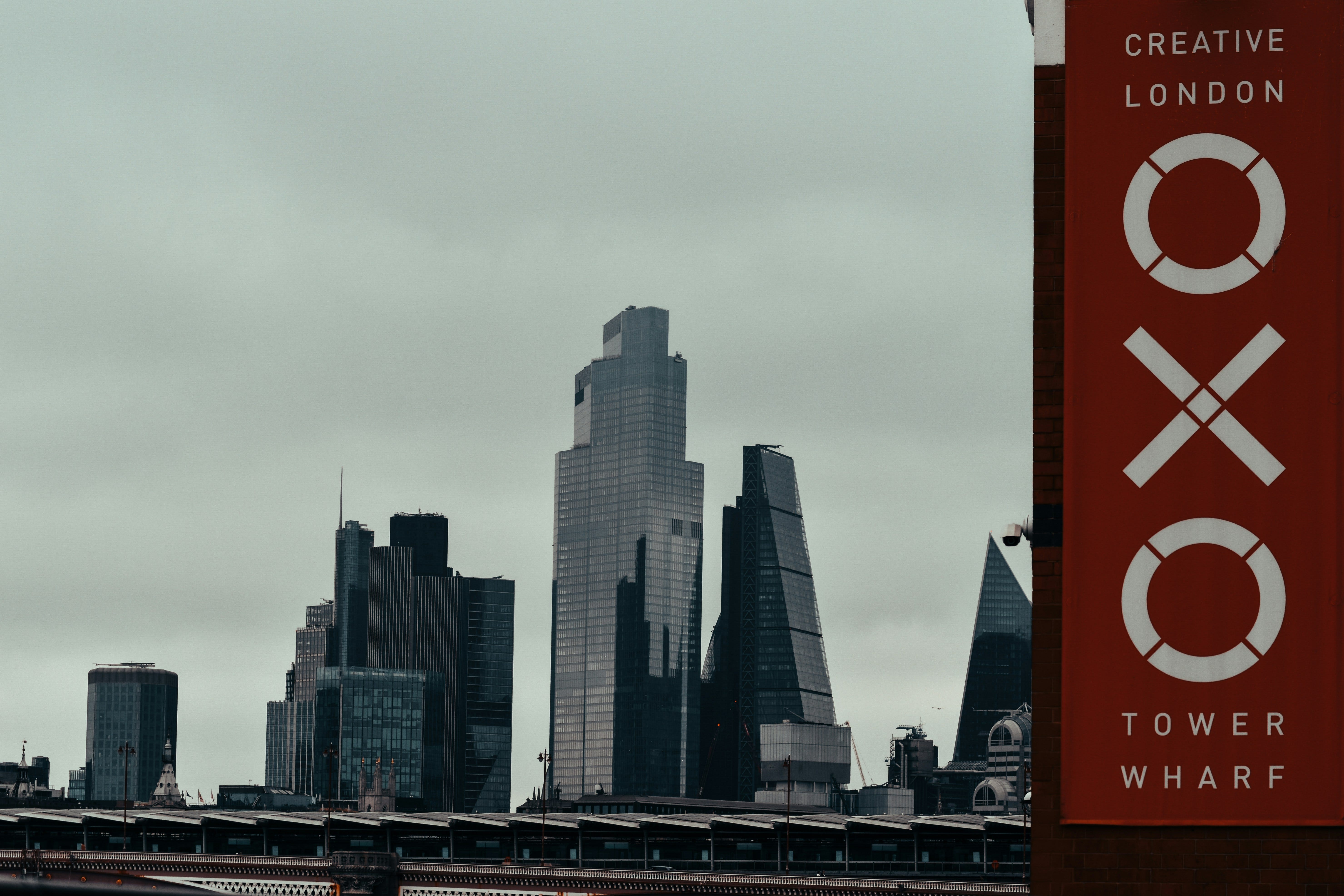
Areas such as Toronto’s distillery quarter and New York’s meatpacking district retained their names but took on a new image and name, while retaining the geographical separation that has defined them. The conversion of the power station on Bankside into an art gallery and the OXO building into an exhibition and retail space finalised the shift of the South Bank from wharves and warehouses into a cultural and creative quarter.
Certain districts have gained global recognition as tech and creative hubs, such as Digital Shoreditch (also known as Silicon Roundabout) in east London, alongside developing digital communities taking shape in former industrial zones across Amsterdam, Berlin, Paris and New York.
The next stage of this transformation accompanied the rush to redevelop more remote, derelict parts of London as escalating house prices made new areas more attractive. Here, the use of the “quarter” becomes a way of adding a name redolent of historical associations or skilled trades that would add a marketing vibe — often on land with no particular historical connotation.
One such development, Green Quarter in Southall west London, offers apartments and penthouses on land, a wider development known as Quarter Yards that was previously occupied by a gasworks. As those works provided input for the ceramics industry, one of the developments is called Brickfields as a minimal memento.
Another is Manor Road Quarter in Canning Town, east London — also known as Cerulean Quarter from the colour of its main building — that will replace a retail park with a residential development, involving a total of 804 new homes, including a 32-story tower in its first phase.
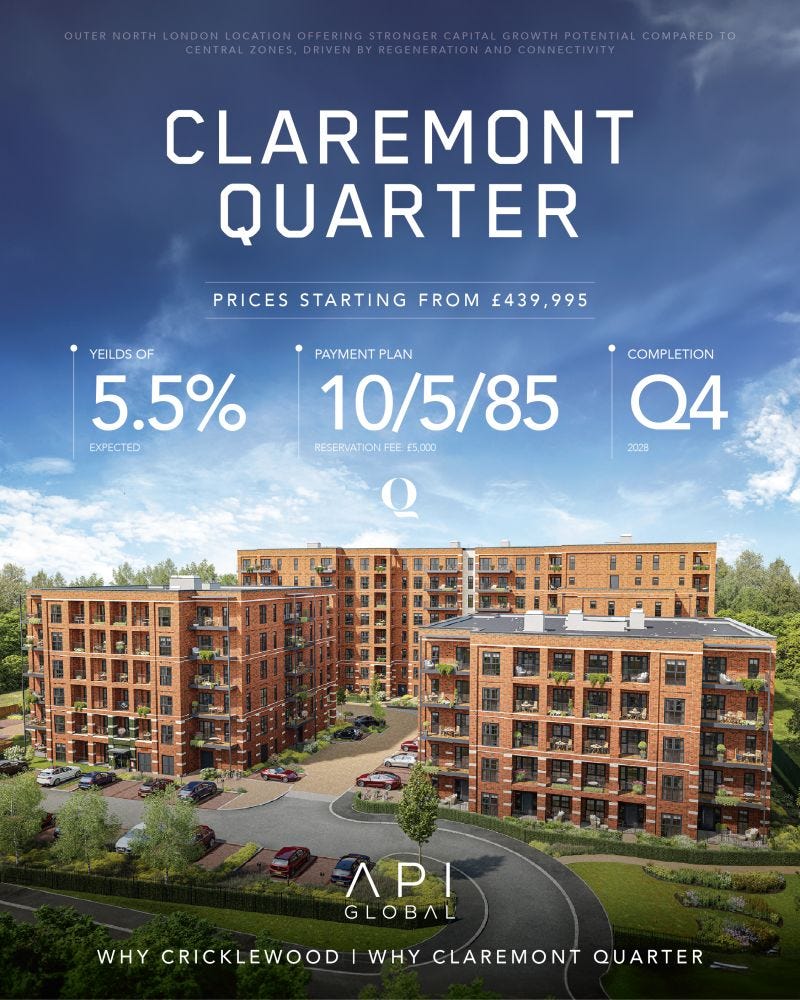
This list goes on, touching other compass points such as Claremont Quarter in Cricklewood, north London, that replaces a waste transfer station with 250 homes; and Clapham Quarter in south London, a private gated development of 36 homes that will supersede a supermarket car park.
Sometimes these developments straddle the gap by combining the concept of an industrial quarter with the high-level residential offering. In north London, the Camden Film Quarter is seeking to create a new area filled with businesses associated with film and television drama production in the UK, replacing an industrial estate in Kentish Town that currently houses the borough’s recycling hub.
It offers the prospects of “film and television studios, creative workspaces … [and] two new schools specialising in film and television”. However, it has been vehemently criticised for — among many, many other issues —including 24-storey tower blocks that would block neighbours’ sunlight.
The vision thing
Perhaps we should just accept that quarter is just a word and that within an urban planning and development world that is primarily driven by free market ideology and liberal economics, anyone with entrepreneurial drive can create a “quarter”.
But the worry is that this latest phase in the shift from bottom-up to top-down identity creation has taken the city policymakers out of the equation. City districts are being reimagined and shaped through marketing and branding efforts rather than as part of a wider vision.
The story of the urban quarter should ultimately be a story about identity — who creates it, who controls it and who benefits from it. Birmingham’s Jewellery Quarter endures because its identity was forged by the people who lived and worked within it over centuries. The Distillery District, the Meatpacking District, Silicon Roundabout — even these reinventions carried the echo of history.
But when a developer can conjure a “quarter” from a supermarket car park or a gasworks with little more than a colour palette and a marketing brochure, something important is lost. Cities thrive when their districts grow from shared purpose and collective memory, not from sales targets. If planners and communities allow the branding playbook to continue writing urban history, future generations may inherit a city of quarters with no real story left to tell.